Use Music to Build a Strong Memory
Written by Jimmie Burroughs – E-Mail to a friend

Music related muscle memory builds your memory. This is not a new discovery. Ancient cultures have been using music to enhance memory and health for hundreds of years. Muscle memory is related to more than just music only, but music is a proven exceptional vehicle for building a strong memory.
You may be wondering what muscle memory is and why it is important.
Muscle memory is training your muscles to remember certain movements. For example, learning the musical chords on a guitar is training the muscles to direct the fingers to the right position to create the sound of a particular chord. In order for the muscles to be fully trained to make the movements automatically and quickly from one chord to the next, there must be many repetitions.
It has been documented that muscle memory is important in building a strong memory. Scientific tests have proven that learning to play a musical instrument impacts the brain and makes it more effective. Memory and mental effectiveness can also increase by listening to certain types of music, as we shall see as we move forward.
To become accomplished guitarists requires much practice in order to gain the muscle memory required to play smoothly. The brain can learn to execute hundreds of chords over time, although, with as little a dozen chords you can play many songs. You might be wondering what this has to do with memory. Simply put, muscle memory is the root of our thinking and memory. When you play the guitar or any musical instrument, your mind must go back into the memory banks and retrieve all the various movements required to play a particular song. Over time, you can memorize and store in your memory dozens of songs. This activity builds a strong memory as well as intelligence.
Muscle memory creates the ability to do things with automaticity. I learned to swim as a child. If I were to go for years without swimming, I could still jump into deep water and swim because my brain would send the memory of how to swim to the muscles automatically. We do not have to think about the process of muscle memory; it comes automatically with no effort. It is not difficult to do multiple muscle memory acts all at the same time without thinking about it. For example, you can drive a car, talk and eat a sandwich at the same time, and the reason is muscle memory.
The muscles are connected to the mind, and the heart or emotions. They work in unison to perform the tasks that you desire to achieve whether it is little everyday tasks or larger goal oriented tasks. Training the muscles to perform the tasks required to play a musical instrument is building your ability to use your memory, mind and emotions more efficiently.
Just listening to certain kinds of music can build memory effectiveness. An experiment conducted by the scientist at the University of California at Irvine, published in the journal Nature, concluded that students who listened for ten minutes to Mozart’s sonata for two pianos in D major scored higher on reasoning tests than students who remained quite for ten minutes.
I started playing the guitar seven years ago. I am not musically talented. I was told years ago that I could not sing, so I believed it. There was some truth to it because I am not a great singer, but I can sing far better than I ever dreamed I could. Over the years, I have learned the chords and lyrics to dozens of songs and play and sing just about ever day. Some of my songs are recorded and can be located on the navigation bar at the top of the page under videos. The greatest reward has been that by memorizing the songs, my ability to think, remember and to use my brain to reason has been strengthened greatly.
There is an interesting quote, “Practice beats talent when talent doesn’t practice.” The truth of the matter it has taken years of practice for me to learn some of the more difficult songs. I know that a talented musician could learn a song in a relative short time, but remember I am not a talented musician. The good thing is that it takes less time now to learn a song now than it did before. The point I am making is that you do not have to become an accomplished musician to benefit from learning to play an instrument. The results in memory enhancement from learning music and how to play an instrument are worth the effort and for me it is a good hobby and very enjoyable.
Here are five tips on learning to play a musical instrument.
1. Take lessons on the instrument of your choice. Do not use the excuse that you are too old to take lessons. I was the oldest student that my professional teacher ever taught.
2. Get into a routine of playing each day. Even if you only play for a few minutes each day, it is valuable in learning to play.
3. Use repetition. Sing and play a song slowly at first until you learn to play it right; then play it each day until you have it down.
4. Form the best musical habits to start with. The brain will learn things the wrong way just as easy as it will learn them the right way. However, it is difficult to break a wrong learned habit. This is where a music teacher can be a great help.
5. Let music create joy in your life. There are many things going on in the world today that can drain all of the joy right out of you. Music, whether playing or listening, can add great joy to your life.
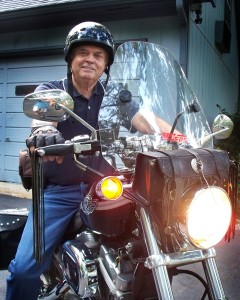 About the author: Jimmie Burroughs is a motivational speaker and author who’s been involved in teaching Christian Personal Development for more than 30 years. He is a dedicated believer in Jesus Christ and considers helping others his calling in life. His websites contains over 600 articles on preparing yourself for success and better living through personal development.
 To subscribe to JimmieBurroughs,com, simply click on the RSS button on the left, and copy and paste the URL of our RSS feed into your RSS reader. ARTICLE INDEX _________________________________________________________________________________________ © 2011 Jimmie Burroughs. All rights reserved